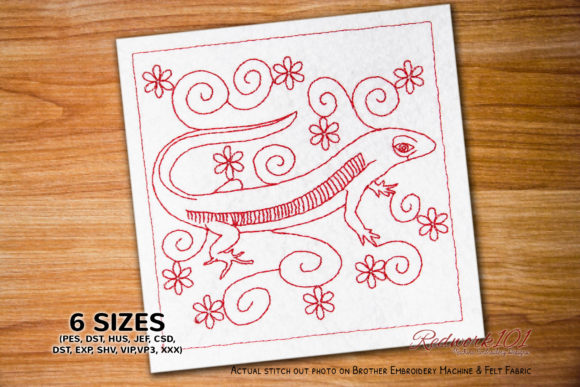
Common Lizard with Floral Background
A Practical Embroidery Designer’s Review for Small Business Use
As an embroidery designer who’s developed hundreds of machine embroidery designs for small businesses—from neighborhood cafés and florists to pet brands and handmade studios—I approached Common Lizard with Floral Background with a very specific question: Does this design translate into professional, scalable, and brand-consistent merchandise? Not just as decoration—but as functional brand identity stitched into aprons, caps, tote bags, and product packaging.
First Impression: Friendly, Botanical, and Distinctly Handmade
The title alone signals a thoughtful blend: reptilian charm meets soft botanical detail. This isn’t a cartoon lizard or a scientific illustration—it leans into approachable elegance. The floral background suggests craftsmanship, care, and organic authenticity—ideal for boutiques, eco-conscious brands, garden centers, or creative studios that want warmth without sacrificing polish. It reads as handmade product rather than mass-produced clip art, which builds instant trust with customers browsing Etsy, local markets, or boutique shelves.
Real-World Performance Across Merchandise Types
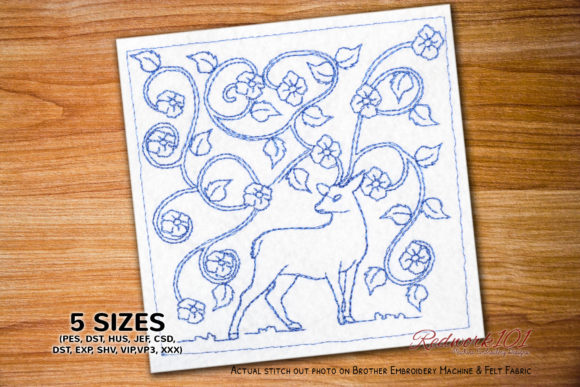
Common Lizard with Floral Background excels where many nature-themed embroidery files falter: balance. The central lizard anchors the composition, while the floral elements frame—not overwhelm—it. That makes it unusually versatile:
- Embroidered patches: Works beautifully at 2.5"–3.5" width. The outer box (not part of the core design, per the description) can be omitted for cleaner edge finishes on woven or chenille patches.
- Apron embroidery: Ideal for lower-left chest placement. Its vertical flow complements apron pockets and avoids visual competition with text or logos.
- Cap embroidery: Best suited for back-strap or side-panel placement—not front crown—due to moderate detail density. Test at 2.0" height first.
- Tote bag design: Holds up well on cotton canvas or linen blends. The floral background adds texture without muddying at larger scales.
- Staff uniforms & work shirts: Projects quiet confidence—not loud, not generic. Perfect for a reptile rescue volunteer shirt or a botanical apothecary team uniform.
- Product packaging accents: Stitches cleanly onto fabric tags, twill tape, or embroidered labels sewn into handmade goods.
Where to Use It With Intentional Care
Every strong machine embroidery design has boundaries—and Common Lizard with Floral Background is no exception. Avoid using it:
- Below 1.75" wide on curved surfaces (e.g., cap fronts), where floral details may collapse or stitch density increases risk of puckering.
- On heavily textured fabrics (like bouclé or thick burlap) without aggressive cutaway stabilizer—fine stems and leaf outlines need clean fabric support.
- With low-contrast thread colors on dark uniforms—test black lizard + muted sage florals on navy twill before bulk production.
- In high-wash environments (e.g., restaurant aprons) without securing underlay and satin-fill reinforcement on delicate outer petals.
How It Strengthens Brand Identity & Customer Connection
For small business owners, every stitch is a brand signal. Common Lizard with Floral Background quietly communicates several key values: attention to detail, reverence for nature, and artisan-level curation. Unlike generic stock icons, it feels intentional—like the business chose it because it reflects their story (a herpetologist-owned pet shop, a native-plant nursery, a reptile-themed children’s book illustrator). That intentionality boosts perceived value, encourages social sharing (“Look at my café’s embroidered tote!”), and supports visual consistency across digital mockups, physical merch, and in-store signage.
Customers don’t just buy a logo—they buy belonging. This design invites curiosity and warmth. A florist pairing it with dried-flower sachets? A reptile rescue adding it to adoption kits? Both feel cohesive, memorable, and authentically human.
Essential Embroidery Designer Notes Before Production
Before sending Common Lizard with Floral Background to your embroidery machine—or sharing it with a client—follow these non-negotiable steps:
- Test in black and white first. Confirm legibility and balance without color distraction.
- Check small-patch viability. Resize to your most common patch dimension (e.g., 2.25") and verify outline integrity and floral spacing.
- Review thread color contrast. Especially where lizard scales meet floral stems—low contrast = lost definition.
- Inspect spacing between elements. Tight gaps between petals or near the lizard’s limbs may require manual digitizing tweaks for optimal stitch flow.
- Confirm hoop size compatibility. Does it fit comfortably within your standard 4x4 or 5x7 hoop without re-hooping mid-stitch?
- Test on real fabric. Run a sample on your target material—cotton duck, twill, or polyester blend—to assess tension, stabilizer needs, and wash durability.
- Create a printable mockup. Show clients how it looks stitched—not just vector-placed—on actual product photos.
- Compare beside other design assets. Does it harmonize with your existing logo, typography, and brand palette?
- Verify commercial licensing. Since this is intended for small business merch, custom apparel, and commercial embroidery, confirm the digital embroidery file includes rights for resale and branded use.
Remember: the “Box Stitch” mentioned in the description is optional—and intentionally separate from the core artwork. Most designers omit it unless the box serves a structural or branding purpose (e.g., framing a series of Reptiles-themed patches). Let function guide that call—not default habit.
Ultimately, Common Lizard with Floral Background isn’t just another embroidery file. It’s a subtle but strategic tool for small businesses ready to move beyond generic logos and into meaningful, tactile brand expression. When executed with care, it transforms everyday items—a tote, an apron, a cap—into quiet ambassadors of craft, care, and character.