Rose Corner: A Thoughtful Floral Embroidery Design for Real Projects
As a designer who’s stitched hundreds of floral motifs across apparel, home goods, and boutique merchandise, I approached Rose Corner not as another pretty digital file—but as a potential teammate in my next client project. Last week, I used it to embroider the upper-left corner of a natural linen tote bag for a local botanical café’s limited-run gift set. That real-world test revealed what this design truly offers—and where it asks for thoughtful handling.
First Impressions: Graceful, Not Fussy
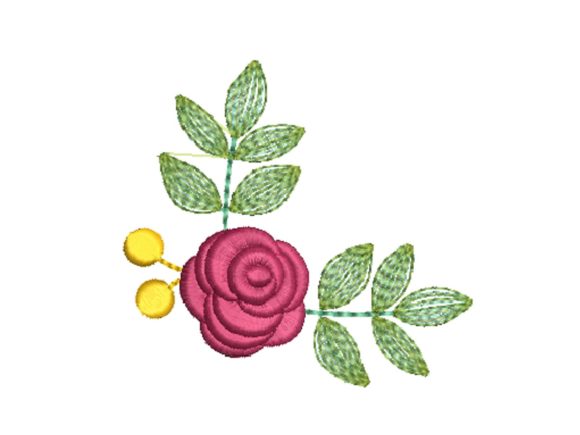
Rose Corner lands with quiet confidence—not loud, not overly ornate, but unmistakably floral in spirit. The rose blooms are stylized just enough to read clearly at medium scale, with soft petal layering and subtle vine movement that suggests growth rather than rigidity. It’s not an applique design; it relies on satin stitch definition and delicate fill stitch transitions to shape each petal and leaf. There’s no heavy outlining or dense underlay—so it breathes well on lightweight fabrics, but also means it won’t mask flaws in stitching or stabilizer choice.
The layout is intentionally asymmetrical, leaning into the “corner” concept without feeling boxed-in. That makes it ideal for placements where you want elegance without symmetry: the front pocket of a denim apron, the hem edge of a baby blanket, or the curved brim of a structured cap (with careful hooping). It doesn’t shout—it invites closer looking. That’s a strength for handmade product branding, especially when your customers value subtlety over flash.
Where Rose Corner Shines—And Where It Asks for Care
I’ve stitched Rose Corner across six fabric types so far: midweight cotton twill (tote bags), French terry (sweatshirts), 100% combed cotton jersey (baby onesies), linen-cotton blend tea towels, brushed poly-cotton pillow covers, and lightweight chambray (caps). Here’s how it performed:
- Custom apparel: Clean on sweatshirts—especially with matte thread colors like heather grey or olive. Avoid placing near high-stretch seams unless you add light cutaway stabilizer underneath.
- Tote bag design: Perfect balance of detail and durability. The outer vine elements anchor the composition without competing with handles or pockets.
- Baby embroidery: Worked beautifully on pre-washed onesies—but only after testing on scrap with tear-away + light cutaway combo. The fine stem lines need stability on thin, stretchy knits.
- Holiday embroidery & wedding gifts: Paired with ivory thread on slate-blue linen napkins, it felt heirloom-soft and intentional—not seasonal, but timeless. Great for monogrammed guest towels or keepsake sachets.
- Embroidered patch: Not recommended as-is. No border or backing stitches mean it won’t hold up cleanly when cut out. If you’re making patches, treat it as an in-the-hoop base and add your own finishing layers.
Fabric & Placement Considerations You Can’t Skip
This isn’t a “set-and-forget” machine embroidery design. Its charm lives in its delicacy—and that delicacy demands attention:
- Textured fabrics (like bouclé or heavy terry): Reduce stitch density slightly in your software if possible—or expect minor thread lift in petal centers. Test first.
- Dark fabric: Use high-contrast thread (ivory, pale gold, or cream) for legibility. Black-on-charcoal gets muddy fast—the fill stitch isn’t dense enough to overpower shadow.
- Curved surfaces (caps, sleeves): Hoop with stabilizer *and* fabric taut, but don’t overstretch. The vine’s gentle curve adapts well—if the base layer stays flat during stitching.
- Small hoop sizes: It fits comfortably in a 4×4 hoop, but trimming inner details (like tiny leaf veins) may be lost below 3.5" width. Check your file’s actual dimensions before scaling down.
- Frequent washing: Recommend polyester thread and a light rinse-and-line-dry finish for baby items or kitchen towels. Cotton thread softens faster, which suits heirloom pieces—but not daily-use tea towels.
What Rose Corner Adds to Your Finished Product—Beyond Pretty
For Etsy sellers and small shop owners, Rose Corner quietly lifts perceived value. When stitched onto a plain cotton apron or ceramic mug sleeve, it signals care—not just decoration. Customers notice the rhythm of the vines, the way petals taper, the absence of jagged edges. That translates to higher trust in your handmade product, stronger brand consistency (especially for botanical, wellness, or slow-living aesthetics), and better photo appeal in printable mockups.
It also supports buyer engagement: people pause longer on listings featuring this design. Not because it’s flashy—but because it feels considered. That pause matters when you’re competing in crowded digital marketplaces or craft fairs.
Practical Designer Notes Before You Stitch
Before adding Rose Corner to your next commercial embroidery project or digital product preview, do these five things:
- Test the embroidery file on scrap fabric *exactly* like your final product—same thread, same stabilizer, same hoop size.
- Check thread color contrast in both natural and artificial light. What reads softly in daylight may vanish under retail lighting.
- Review stitch density visually—not just numerically. Dense areas should flow, not pile up.
- Confirm hoop size compatibility. Some versions of this design may include multiple sizes; verify which one matches your machine’s limits.
- Verify licensing terms. Since this is a digital embroidery file intended for commercial use, confirm whether resale of finished embroidered items is permitted—and whether redistribution of the file itself is restricted.
Lastly: try it in black-and-white mockups. If the shape holds up without color, you’ve got a strong, versatile design asset. Rose Corner does—and that’s why it’s earned space in my go-to folder for personalized gifts, boutique branding, and small-batch merchandise alike.