Daisies
A Delicate Bloom for Every Project
As a designer who works with embroidery on a daily basis, I approach each new design with the same curiosity and critical eye. Daisies is one such design that immediately caught my attention—not just for its visual appeal, but for its versatility and practicality in real-world applications. It’s the kind of embroidery file that feels like it was made for a specific purpose, yet has enough flexibility to adapt to a wide range of projects.
The First Impression: Soft and Playful
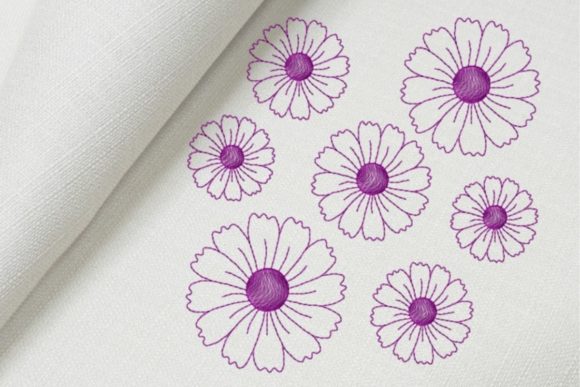
At first glance, Daisies exudes a soft, whimsical charm. The flower itself is well-proportioned, with a classic daisy shape that’s both familiar and appealing. The layout is clean, allowing the design to stand out without overwhelming the fabric. What stands out most is the balance between detail and simplicity—there are enough intricate elements to suggest depth, but not so many that it becomes cluttered or hard to stitch.
The overall mood of Daisies is gentle and inviting, making it an excellent choice for projects that aim to evoke warmth and comfort. It’s the kind of design that would feel right at home on a baby item, a holiday gift, or even a boutique product meant to bring a touch of cheer to everyday life.
Real-World Use Cases: Where Daisies Shines
When considering how Daisies performs in real-life scenarios, I found myself imagining a few key applications. One that stood out was a custom embroidered tote bag. The design’s delicate nature would complement the casual, functional aesthetic of a tote while adding a subtle pop of personality. Similarly, it could work beautifully on a sweatshirt or t-shirt, where it would serve as a charming accent rather than the main focal point.
I also thought about baby items—think onesies, bibs, or blankets. Daisies’ softness and cuteness make it ideal for these kinds of projects, where the design needs to be both visually appealing and safe for young children. It’s also a great fit for holiday embroidery, especially for gifts like pillow covers or kitchen towels, where a touch of floral elegance can elevate the look without being too overpowering.
For commercial use, Daisies offers a lot of potential. Whether it’s for a small shop product, an Etsy listing, or a craft fair item, the design has the versatility to fit into various branding strategies. It’s not too bold, which means it can be easily adapted to different color schemes and styles without losing its identity.
Where to Be Cautious: Practical Considerations
While Daisies is a strong contender for many projects, there are a few areas where it might require extra care. For instance, using it on small hoop sizes could result in a loss of detail, especially in the more intricate parts of the flower. Similarly, on textured fabrics or thin materials, the design might not stitch as cleanly, leading to some distortion or uneven stitching.
Dark fabrics can also pose a challenge. While Daisies works well on light-colored backgrounds, it may not show up as clearly on darker surfaces unless the thread colors are carefully chosen. This makes it important to test the design on scrap fabric first and consider the contrast between the embroidery and the base material.
Another consideration is the use of Daisies on curved surfaces like caps or hats. The design’s layout is somewhat flat, which could lead to stretching or misalignment when applied to rounded shapes. It’s worth checking the stitch density and ensuring that the stabilizer used is appropriate for the project type.
Design Quality and Visual Appeal
Overall, Daisies delivers a high level of visual appeal. The stitch density is consistent, and the details are well-executed, which is a sign of a professionally crafted embroidery file. The use of satin stitch and fill stitch adds texture and dimension, while the running stitch elements provide a nice contrast and help define the flower’s structure.
From a design perspective, Daisies is a great example of how a simple motif can be made to feel sophisticated. It has the potential to enhance the value of a handmade product, whether it’s a personalized gift or a custom apparel piece. The design’s ability to blend seamlessly into various contexts makes it a reliable choice for both personal and commercial projects.
Practical Designer Notes for Success
If you’re planning to use Daisies in your own projects, here are a few tips to ensure the best results:
- Test on scrap fabric first: Always check how the design looks and stitches before applying it to your final project.
- Review thread color contrast: Choose thread colors that complement the fabric and enhance the design’s visibility.
- Confirm hoop size: Make sure the hoop is large enough to accommodate the design without distorting it.
- Use proper stabilizer: A good stabilizer will help maintain the fabric’s integrity and improve stitching quality.
- Inspect small details: Look closely for any minor imperfections or inconsistencies that might affect the final outcome.
- Test in black and white mockups: This helps identify any issues with stitch density or layout before coloring.
- Compare light and dark fabric backgrounds: Ensure the design works across different color palettes.
- Check licensing terms: If you plan to sell finished products or digital files, confirm the usage rights to avoid legal issues.
With the right preparation and attention to detail, Daisies can become a standout feature in your next embroidery project. Whether you're crafting a personalized gift, designing for a small business, or creating digital assets for sale, this design has the potential to add a meaningful touch to your work.