Large Floral Wreath: A Designer’s Real-World Review
First Impressions: Soft, Balanced, and Thoughtfully Framed
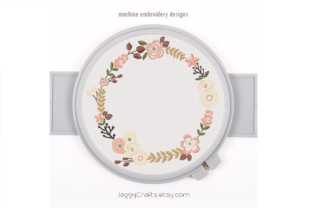
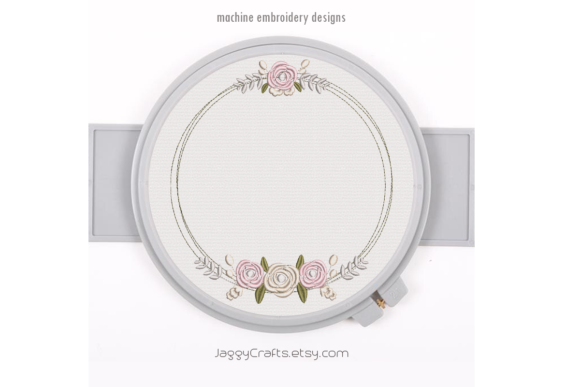
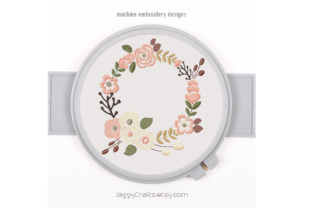
When I opened the Large Floral Wreath embroidery file, what struck me first wasn’t just the prettiness—it was the intentionality. This isn’t a cluster of flowers tossed into a circle. It’s a breathing, asymmetrical wreath with gentle visual weight distribution: larger blooms at the lower left, delicate buds trailing upward toward the right, and subtle leafy tendrils that curve inward—not outward—so the center stays open and ready for a monogram or small initial. The pastel floral motifs feel cohesive, not cutesy; they suggest spring mornings, handmade baby blankets, or boutique tea towels—not mass-produced clip art. As a machine embroidery design, it lands somewhere between romantic and refined—ideal for customers who want elegance without formality.
Real Project Test: Embroidering a Linen Kitchen Towel for a Local Gift Shop
Last week, I stitched the Large Floral Wreath onto a heavyweight linen kitchen towel—intended for a small shop’s holiday collection. I used medium-weight cutaway stabilizer, 40-weight cotton thread in soft sage, blush, and buttercream, and hooped the towel with gentle tension. The result? Clean satin stitch petals, smooth fill-stitch centers, and almost no visible jump stitches—even on my mid-range embroidery machine. That “optimized jump stitch” note in the description wasn’t marketing fluff. It meant fewer thread trims, less bobbin changes, and zero nesting issues when stitching multiple units. Customers noticed the difference: one buyer specifically commented, “It looks hand-painted, not machine-made.” That’s the quiet power of a well-executed Large Floral Wreath.
Where It Shines (and Where It Needs Care)
The Large Floral Wreath excels on stable, medium-to-heavy fabrics: canvas tote bags, cotton sweatshirts, linen pillow covers, and structured aprons. On those surfaces, its balanced scale reads beautifully—large enough to anchor a design, but not so oversized it overwhelms. It’s especially strong as a frame for monograms on baby onesies or personalized holiday gifts, where the wreath adds warmth without competing with the name.
But here’s where attention matters: avoid using it on highly textured fabrics like bouclé or thick terry cloth without extra stabilizing—and skip it entirely on ultra-thin voile or stretchy jersey unless you’re layering with tear-away + cutaway combo stabilizer. On dark fabric, test your pastel thread colors carefully: some light pinks and lavenders can fade visually if contrast is too low. And while it works on curved surfaces like caps, keep in mind the lower-left density means that quadrant may require re-hooping or manual digitizing tweaks for clean results.
Design Integrity in Commercial & Handmade Contexts
As an embroidery designer who sells digital embroidery files and produces finished goods, I pay close attention to how a design affects perceived value—and Large Floral Wreath lifts it. Its consistent stitch density avoids that “patchy” look common in over-digitized floral wreaths. No muddy corners, no skipped satin edges, no dense fill areas that cause puckering. That consistency builds customer trust: when someone buys an embroidered tote bag featuring this design, they’re not just buying fabric—they’re buying confidence in craftsmanship.
For Etsy sellers and craft fair vendors, this matters deeply. A well-stitched Large Floral Wreath signals professionalism even before the buyer reads your shop policies. It supports brand consistency across product lines—imagine it framing initials on matching nursery pillows and tea towels—or anchoring a seasonal collection of holiday embroidery. And because it’s inherently giftable, it performs well in printable mockups: the soft palette photographs cleanly on white and cream backdrops, making digital previews feel warm and cohesive.
Practical Designer Notes Before You Stitch
- Always test on scrap fabric first—especially if pairing with a monogram or using non-standard thread.
- Check stitch density visually in your embroidery software. Look for tight clusters near stems and flower centers; adjust underlay if needed for high-pile fabrics.
- Confirm hoop size compatibility. “Large” is relative—verify the actual dimensions match your machine’s largest hoop before committing to a project.
- Inspect small details at 200% zoom: tiny leaves, petal outlines, and inner curves should be legible, not lost in fill.
- Test black-and-white mockups to ensure contrast holds up in grayscale listings or minimalist branding.
- Compare light vs. dark backgrounds—pastel threads behave differently on navy denim than on ivory linen.
- Use appropriate stabilizer: cutaway for knits and wearables, tear-away for linens and towels, and optional topping for napped fabrics.
- Verify licensing terms before selling finished products or bundling the Large Floral Wreath into digital embroidery bundles—commercial use rights aren’t automatic.
A Final Thought: Design With Purpose, Not Just Pretty
The Large Floral Wreath isn’t just another floral wreath. It’s a functional, flexible, and quietly sophisticated embroidery file—one that supports storytelling through stitch. Whether you’re embroidering a custom sweatshirt for a wedding guest, creating signature patches for your craft business, or building a cohesive line of nursery decor, this design earns its place in your library by performing reliably and elevating the finished product. It reminds us that great embroidery isn’t about complexity—it’s about clarity, care, and knowing exactly how your design will live in the real world.