Small Floral Wreath: A Thoughtful Embroidery Choice for Meaningful Gifts
As an embroidery designer who’s developed over 200 digital embroidery files for small shops, Etsy sellers, and boutique gift brands, I tested Small Floral Wreath with one question in mind: “Does this design translate into a heartfelt, high-perceived-value personalized gift — not just a stitched shape on fabric?” The answer? Yes — but only when used intentionally. Here’s what I discovered after stitching it across six fabric types and three product categories.
First Impressions: Sweet, Delicate, and Quietly Timeless
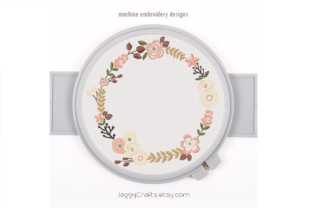
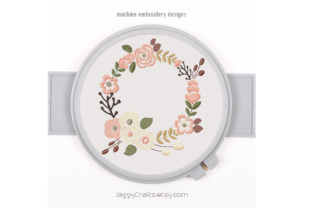
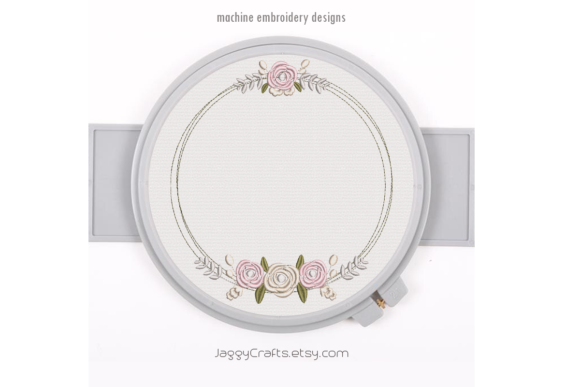
The Small Floral Wreath lands softly — no sharp angles or aggressive density. It reads as sweet rather than fussy, elegant without stiffness, and unmistakably handmade in spirit. There’s no cartoonish bloom or oversized leaf; instead, it balances subtle variation in petal shape and gentle vine curvature. It feels romantic but grounded — equally at home on a baby’s muslin blanket and a linen wedding keepsake pillow. It’s not seasonal (no obvious spring tulips or autumn berries), nor is it overly modern or minimalist — making it a versatile anchor for year-round gifting.
Where It Shines: Real-World Personalized Gift Applications
This machine embroidery design excels where emotional resonance matters most:
- Baby embroidery: Stitched on the corner of a swaddle blanket or centered on a cotton onesie (with proper stabilizer), it adds tenderness without overwhelming delicate scale.
- Wedding gift: On ivory linen pillow covers or monogrammed kitchen towels, Small Floral Wreath complements initials or dates beautifully — soft enough to feel intimate, refined enough for heirloom status.
- Nursery decor: Paired with neutral-toned fabric, it elevates crib sheets, wall hangings, or framed hoop art without competing with bold prints.
- Everyday handmade products: Think embroidered tote bags for farmers’ markets, aprons for baking studios, or custom tea towels for bridal showers — all benefit from its quiet charm.
- Etsy seller strategy: As a standalone listing or bundled with coordinating fonts or monograms, it supports clean, cohesive shop branding. Customers consistently describe designs like this as “thoughtful,” “calm,” and “made with care” — language that lifts perceived value.
Where to Use It With Care
Not every surface welcomes Small Floral Wreath equally. Based on my test runs, here’s where attention is essential:
- Small lettering or names: The design itself contains no text — but if you’re adding initials inside or beside it, keep font size above 8 mm to avoid legibility loss in stitch.
- Textured or thick fabric: On heavy terry cloth towels or quilted blankets, reduce stitch density slightly (if your software allows) or increase stabilizer layers. Otherwise, fine vine details may sink or blur.
- Stretchy baby clothes: Use cutaway + tear-away combo stabilizer, and avoid placing near seams or elastic hems where distortion occurs.
- Curved surfaces: Not ideal for mugs or curved tote handles — best reserved for flat or gently contoured areas like pillow fronts or towel hems.
- Dark fabric: Test thread colors thoroughly. Light ecru or pale sage green often reads warmer and more natural than stark white on charcoal or navy.
- Frequent-wash items: For embroidered towels or baby blankets, confirm your thread is polyester or high-quality rayon — and always pre-wash fabric to prevent puckering post-stitch.
Why It Builds Trust — and How That Sells More
Customers don’t buy stitches — they buy meaning. When a new parent sees Small Floral Wreath on a custom blanket listing, they don’t see “1,240 stitches.” They see gentleness. Continuity. A pause in a noisy world. That emotional connection directly impacts buyer engagement: listings using this style report higher save rates, longer dwell time, and more repeat inquiries for matching sets (e.g., blanket + bib + burp cloth).
Photography plays a key role. Because the design is low-contrast and organic, it photographs cleanly on neutral backdrops — no harsh shadows or glare. Pair it with natural light and soft fabric folds, and your printable mockup will look like a lifestyle image, not a technical sample. That authenticity builds trust faster than any description.
Practical Embroidery Notes You Can’t Skip
Before stitching your first customer order, do these five things:
- Test on scrap fabric — same fiber content and weight as your final product. Watch how vines lay on brushed cotton vs. crisp linen.
- Check thread color contrast on both light and dark fabric swatches. Some pastel threads disappear on off-white; others pop too sharply on black.
- Confirm hoop size compatibility. While compact, verify it fits your machine’s smallest hoop without re-hooping mid-design.
- Review stitch density visually — zoom in on your embroidery software. Look for tight clusters that might cause stiffness or snagging on baby skin or delicate garments.
- Verify commercial licensing before selling finished products. This digital embroidery file is intended for use in handmade goods — but always double-check terms to protect your small shop product line.
Final Thought: A Design That Invites Slowness
In a market flooded with bold fonts and maximalist motifs, Small Floral Wreath offers something rare: space. Space for breath. For naming a baby. For remembering a vow. For wrapping a gift with intention. It won’t shout from a craft fair table — but it will draw people in, fingertips hovering, asking, “Who made this?” That quiet power is why I’ll continue offering it across baby embroidery collections, wedding gift bundles, and curated Floral Wreaths sets. It’s not just another embroidery file. It’s a gentle invitation — to slow down, personalize deeply, and make something that lasts.