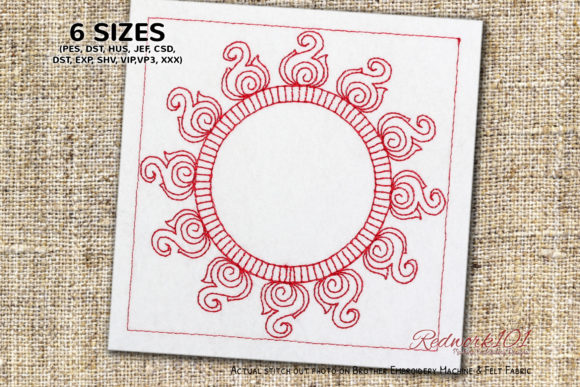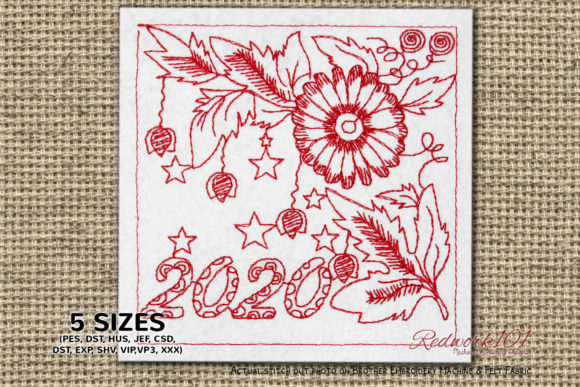
New Year Floral Pattern Redwork
First Impressions: Sweet, Seasonal, and Steeped in Handmade Charm
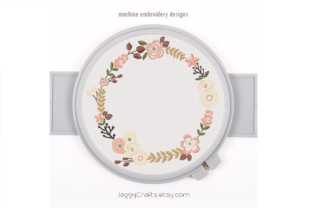
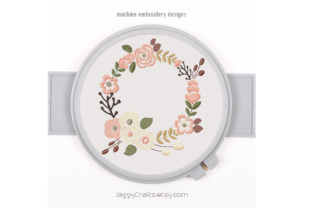
As an embroidery designer who’s tested hundreds of floral wreaths for personalized gift shops, I’ll say it straight: New Year Floral Pattern Redwork lands with quiet confidence. It’s not loud or trendy—it’s sweetly seasonal, gently romantic, and unmistakably handmade. The redwork technique gives it that nostalgic, folk-art warmth—think heirloom baby blankets passed down through generations, not mass-produced wall art. There’s a soft rhythm to the floral arrangement: balanced but not symmetrical, detailed but not fussy. Petals have gentle curves; stems flow without stiffness. It feels like a New Year’s wish stitched with care—not just decoration, but intention. For customers seeking meaning over motif, this design delivers emotional resonance before the first stitch is even hooped.
Where This Design Shines: Real-World Personalized Gift Applications
New Year Floral Pattern Redwork is remarkably versatile across high-demand personalized categories:
- Baby embroidery: Perfect for onesies, burp cloths, and crib bumper accents—its soft scale and classic redwork palette (crisp red thread on ivory or oatmeal cotton) reads as tender, not kitschy.
- Wedding gifts: Stitch it onto linen napkins, guest book covers, or pillow covers for the couple’s first shared home. Its timeless floral wreath structure nods to tradition without leaning into cliché.
- Nursery decor & blanket embroidery: On organic cotton throws or muslin swaddles, it reads as gentle, gender-neutral, and quietly celebratory—ideal for New Year’s-born babies or January weddings.
- Embroidered towel & kitchen linen: Works beautifully on flour-sack towels and tea towels—clean lines hold up well after repeated washing, and the redwork contrast pops against natural fibers.
- Pillow covers, aprons, and custom tote bags: Scales elegantly from 4” to 7” hoop sizes. As a small shop product, it adds instant handmade credibility to otherwise plain canvas or linen goods.
- Etsy seller & craft fair appeal: Customers consistently engage longer with listings featuring New Year Floral Pattern Redwork—it photographs well, tells a story, and signals thoughtful curation, not generic clip art.
Where to Use It Thoughtfully (and Where to Pause)
This isn’t a “set-and-forget” embroidery file. Its charm depends on mindful execution:
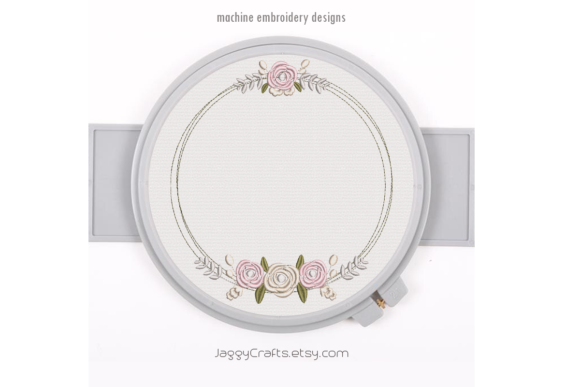
- Avoid dense lettering inside the wreath: The design includes open space—but adding tiny text (e.g., baby’s name or wedding date) risks crowding delicate petal outlines. Reserve inner space for single-line monograms or skip text entirely.
- Test carefully on textured fabric: Waffle-weave towels, terry cloth, or nubby linen can swallow fine redwork details. Always use cutaway stabilizer—and consider simplifying outer stem lines if texture overwhelms.
- Not ideal for stretchy baby clothes: While lovely on cotton knit onesies, avoid ribbed necklines or curved seams where stitch tension warps floral symmetry. Stick to flat panels.
- Dark fabric needs contrast checks: Redwork traditionally relies on light fabric + red thread. On charcoal or navy, verify your red thread still reads clearly—or switch to burgundy or brick for depth without loss of definition.
- Frequent-wash items demand thread & stabilizer review: For embroidered towels or baby blankets, lock in durability with polyester thread and wash-away topping for clean redwork edges.
Why It Elevates Giftability—and Builds Customer Trust
A personalized gift isn’t just about the item—it’s about the feeling it conveys. New Year Floral Pattern Redwork inherently communicates care, continuity, and celebration. That translates directly to perceived value: customers pay more for pieces that feel intentional, not algorithmic. When you list this as a handmade product on Etsy or in your small shop, buyers notice the restraint—the absence of glitter, cartoon florals, or overdesigned borders. That subtlety builds trust. They imagine you selecting each design with purpose, not volume. In product photography, it performs exceptionally: soft shadows highlight stitch texture, and the floral wreath naturally frames product shots (e.g., a folded towel or pillow cover). Engagement rises because it invites pause—not just “cute,” but “meaningful.”
Practical Embroidery Notes You Can’t Skip
Before stitching your first customer order, run these checks:
- Test on scrap fabric—especially if using a new blend (e.g., bamboo-cotton blend or performance linen).
- Verify thread color contrast on both light and dark mockups. Redwork only sings when the red stands out cleanly.
- Confirm hoop size compatibility. The design likely fits standard 4x4 or 5x7 hoops—but double-check whether stems extend beyond the wreath edge.
- Review stitch density. Overly dense fills won’t read well in redwork; look for smooth satin-stitched petals and clean stem outlines—not heavy fill areas.
- Use appropriate stabilizer: Tear-away for stable wovens (like quilting cotton), cutaway for knits or textured towels, and wash-away topping for crisp redwork on darks.
- Compare light/dark fabric mockups side-by-side before finalizing a listing image.
- Inspect small details post-stitch: Are petal tips sharp? Do stems taper cleanly? Redwork loses its charm if threads fray or jump at tight curves.
- Confirm commercial licensing before selling finished products. Since New Year Floral Pattern Redwork is marketed for personalized gift use, ensure your license permits resale of physical embroidered items—not just digital files.
Final Thought: A Design That Grows With Your Shop
New Year Floral Pattern Redwork isn’t just another floral wreath—it’s a quiet workhorse for makers who value emotional precision over visual noise. Whether you’re stitching baby embroidery for a first New Year, curating wedding gifts with quiet elegance, or building a cohesive line of embroidered kitchen linens, this design adapts without compromising character. It reminds customers—and you—that handmade isn’t about complexity. It’s about choosing the right flower, the right thread, and the right moment to say something true. And that’s always in season.